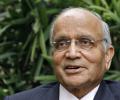
Company managements need to "curtail the kind of expenditures on themselves personally" with the COVID-19 pandemic highlighting the need to build internal resources with a frugal style of functioning, Maruti Suzuki India chairman R C Bhargava said on Tuesday. Addressing shareholders in the company's annual general meeting held virtually, he also termed as "a good development for the whole of industry" recent shareholder actions that did not approve expenditures by management on themselves, without specifying details. In the wake of the pandemic, building internal resources has to become a priority of industry and companies.

MSI expects the royalty paid to parent Suzuki Motor Corp to come down starting with its upcoming compact SUV as its engineers enhance their role in the joint development of future products.

While Toyota will acquire 4.94 per cent shares of Suzuki, worth $ 908 million, the latter will make a $ 454-million investment in the biggest automaker of Japan. Premium products from the Maruti stable such as the Baleno, Ciaz and Vitara Brezza will be sold under the Toyota brand with small changes.
Maruti chairman R C Bhargava tells Sharmistha Mukherjee that there won't be a reduction on its dependence on the facility in Haryana.

Khattar's place will be taken by Shinzo Nakanishi, who is currently the chairman of MSIL. R C Bhargava, who is a director, has been named the new chairman.
The institutes need to reach the optimum level of resource utilisation.

'We have not done budgeting yet for the coming year.'
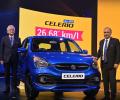
'It will take some more time because the affordability of these cars have changed drastically.'

MSI exported 70,023 units in the 2008-09 fiscal.
Institutional investors and independent advisors are questioning the company's crisis-handling process in the wake of reports that several workers, including strike leaders Sonu Gujjar and Shiv Kumar, quietly resigned after pocketing hefty payouts.
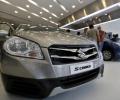
The carmaker has sought 1,292 acres at Industrial Model Township, Sohna, 25km from Gurugram.
Some economists have said the industry's woes have shown signs of bottoming out.
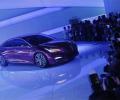
Hyundai, has a share of about 16% and grew sales by less than 4% in April- May 2017-18
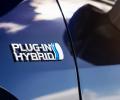
Plug-in hybrids have two engines and the electric part has a much larger battery than in the regular hybrids. Car companies, led by the Japanese, are pushing the Indian government to look at hybrids in the interim if it wants to reduce carbon emission.
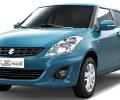
R C Bhargava says company's move on the Gujarat plant will be beneficial to its shareholders.

The country's biggest carmaker, Maruti Suzuki India, has raised concerns about the continuing slide in small car sales.
The country's largest car maker, Maruti Suzuki India, on Tuesday said it, along with vendors, could invest up to Rs 18,000 crore (Rs 180 billion) in Gujarat as it looks to produce about 20 lakh (2 million) units in the long run in the state.

Maruti Suzuki signed a State Support Agreement with the Gujarat government in June 2012 for buying land and setting up a factory
The main problem is that the consumer's purchasing power has been eroded, say RC Bhargava, Maruti's chairman.

Companies in the micro, small and medium enterprises (MSME) sector may legally challenge the Haryana government's new law which mandates 75 per cent reservation of jobs in the private sector for locals. "We had earlier gone to the high court against this law, but the court said that it would hear the matter after the law was notified," said Manoj Tyagi, general secretary, IMT Industrial Association. Industries and associations feel that the law will not benefit the state and will hit MSMEs that are just coming out of the crippling effects of the lockdowns owing to the Covid-19 pandemic.

'We are going to have hybrid cars, which, as far as I know, none of our competition is working on, and this includes ethanol.'
R C Bhargava, Kiran Mazumdar-Shaw & Dinesh K Sarraf are other members of the business delegation

Amid a slowdown in car sales, Maruti Suzuki India on Saturday said it will foray into the light commercial vehicles segment, 30 years after an initial plan was shelved when the company started operations.
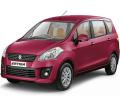
Car marker leader Maruti Suzuki India is looking at nearly doubling the number of models to 25, including entry into SUV and LCV segments, as it aims a target to sell 3 million cars annually.
'It leads to more investment, more money put in R&D, expansion and modernisation.'

Production has been severely hit at the first plant in Manesar since August 29 when the management prevented workers from entering the unit without signing a 'good conduct bond' after alleged 'sabotage' and deliberate quality compromise on cars.
.jpg)
Maruti Suzuki was allotted 700 acres by the Gujarat government for its third manufacturing unit, near Mehsana, in June last year.

The country's largest carmaker Maruti Suzuki India (MSI) is planning to invest around Rs 18,000 crore on a new manufacturing facility in Haryana, as per a top company official. The new plant would replace the company's Gurugram-based facility and is expected to have an installed production capacity of 7.5-10 lakh units per annum. While confirming the Rs 18,000 crore investment plan, MSI chairman RC Bhargava told PTI that the company had always planned to shift the Gurugram facility to a nearby location.

Tata Motors is hoping to beat its target year of 2030 and have 30 per cent of its portfolio comprising electric vehicles (EVs), according to Chairman N Chandrasekaran, who was speaking at the company's last annual general meeting (AGM) ahead if its demerger.

Suzuki and Toyota are in talks for electric mobility and MSI would continue to access technology from its parent.

It expects the Indian market to grow to 10 million units annually by 2030 and it intends to control half the market then, like it does now.
Reliance Capital AMC gets nod to operate in Malaysia Mumbai, Nov 20 (PTI) Anil Ambani-promoted Reliance Capital Asset Management company has been given approval to commence operations in Malaysia, a top official of the Securities Commission, Malaysia, said today.

'At present, hybrids emit lesser carbon despite using fuel than pure play electric cars.' 'That is because EVs have to be charged and 76 per cent of the country's electricity is still coal-based and not renewables.'

Recently, Suzuki Motor Corp (SMC) in an investor presentation expressed strong intent to enter the electric vehicle (EV) space. This is part of a larger strategy the Hamamatsu-based firm has drawn up in developing electrification of technologies as it seeks to achieve carbon neutrality. The significance of this presentation is that it marked the first time that the Japanese carmaker spelt out its EV strategy with well-defined timelines. SMC plans to develop electrification technologies by 2025, fully implement them in products from the same year, and make a full-scale quantitative increase from 2030.

With rising petrol and diesel prices driving up demand for its CNG vehicles, the country's largest carmaker Maruti Suzuki India plans to widen its CNG portfolio by offering the fuel option in four more models 'very shortly', according to a senior company official. The company, which plans to launch an electric vehicle (EV) in the Indian market by 2025, is also currently keeping a close watch on the country's EV ecosystem "to find out what is the best way of evolution" to be able to offer affordable EVs with hassle free charging infrastructure in order to clock high volumes for a sustainable business.

The diesel car becomes too expensive with BS-VI and market assessment says the customer will not buy it at that price, says R C Bhargava, chairman, MSIL. He expects buyer preference to change swiftly in favour of petrol, CNG, and other alternative technologies.
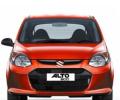
LIC is one of the largest Indian shareholders in the country's largest car maker, with a 6.93% stake.
Suzuki Motor Company chief Osamu Suzuki on Thursday called on Finance Minister P Chidambaram, within a week of the government deciding to sell 8 per cent of its equity in Maruti Udyog Ltd.
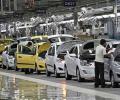
Maruti Suzuki's inventory across its dealerships is a 100,000 vehicles at the end of any month. However, it was only 34,000 vehicles at the end of December 2016.

Maruti will launch its first electric vehicle (EV) in the next financial year (FY24), and will roll out six EVs in the country by FY30, the automaker's parent firm Suzuki said on Thursday.
